.jpg "avatar image")
How SML Seamless combines responsible manufacturing practices with digital transparency across its textile production processes.
Sustainability Goes Beyond the Factory Building
When discussing sustainability in textile manufacturing, attention often turns to energy-efficient facilities, environmental certifications, and greener production technologies. These are important investments, but they represent only part of what responsible manufacturing requires.
A factory may operate in an environmentally certified building, yet still face challenges in understanding how materials are consumed, tracking products through production, and providing customers with reliable information about manufacturing processes.
For textile manufacturers, sustainability is therefore not only a question of physical infrastructure. It is also a question of visibility, accountability, and control across the entire production lifecycle.
SML Seamless, a Turkish manufacturer specializing in seamless activewear and shapewear, offers an example of how these principles can come together.
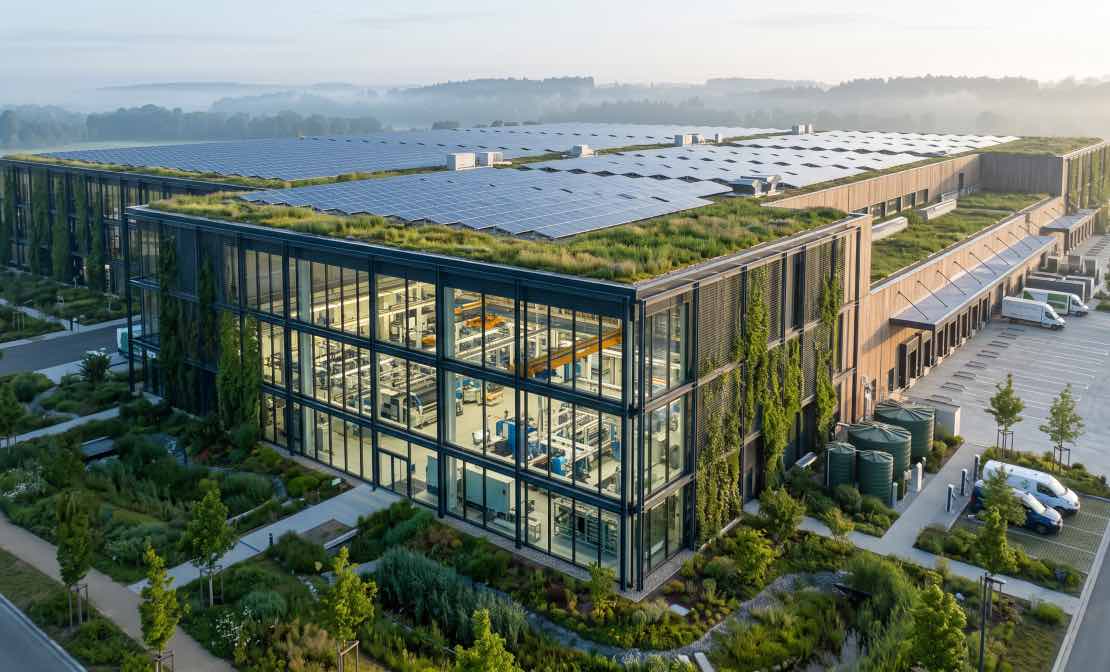
The company operates in a LEED Gold-certified facility designed with sustainability in mind. Yet its approach to responsible manufacturing extends beyond the building itself, encompassing raw material management, chemical responsibility, production traceability, and transparent relationships with customers.
For SML Seamless, digitalization plays an important role in making this approach operational.
A finished garment may appear simple, but its production involves a complex sequence of interconnected operations.
At SML Seamless, the manufacturing process begins with yarn and continues through knitting, subsequent textile processing and dyeing, garment production, packaging, and shipment.
Each stage depends on information generated by the previous one. Materials must be available when required, production quantities must be monitored, and finished goods must be accurately accounted for.
The complexity increases when manufacturers work with different product models, sizes, colors, and customer-specific requirements.
Unlike standardized mass production, SML Seamless operates with a flexible, order-driven manufacturing model. Production requirements can change, equipment may need to be reassigned, and material consumption can vary depending on the product.
Managing these variables requires more than monitoring individual machines or departments. It requires a connected view of the entire production process.
This visibility is also relevant to responsible manufacturing.
When a company understands which materials are used, how products move through production, and where losses occur, it has a stronger foundation for managing resources and responding to questions about its products.
For textile manufacturers supplying international brands, transparency is becoming an increasingly important part of customer relationships.
Brands need dependable information from their manufacturing partners, particularly when questions arise about materials, production processes, or product quality.
SML Seamless approaches this responsibility as part of its manufacturing philosophy.
As the company's CEO, Koray Bey, explains in the interview, responsibility extends to the raw materials the company purchases, the chemicals used in production, and the potential impact of its products on end consumers.
Being able to communicate this information openly is essential.
However, transparency depends on the availability of reliable records.
When production information is fragmented across spreadsheets, departments, and individual employees, retrieving the necessary details can become a time-consuming exercise.
This becomes particularly challenging when a customer raises a question or an unexpected issue requires investigation.
A connected information system helps manufacturers maintain production records and retrieve relevant operational data without reconstructing the entire process manually.
For SML Seamless, this is one of the reasons why traceability and digitalization are closely connected.
Transparency is not simply the willingness to share information. It is the ability to provide accurate information when it is needed.
To manage its interconnected operations, SML Seamless uses 1C:Drive as an integrated business management system.
The solution supports processes extending from purchasing and material management to production planning, inventory control, sales, and shipment.
According to the company's production team, 1C:Drive is used throughout the manufacturing process, from yarn receipt to the packaging and dispatch of finished products.
Production information is collected across departments, allowing employees to monitor operations and access up-to-date records.
For example, during garment production, the team tracks quantities received from preceding stages, production losses, sewn garments, packaged items, and quantities ready for shipment.
These figures contribute to production and shipment reporting, helping employees understand the current status of orders.
Inventory and warehouse records are also maintained within the system, while production and cost reports provide additional operational visibility.
This integrated approach is particularly important for a manufacturer dealing with variable customer requirements and complex production processes.
Rather than relying on disconnected records, departments can work with information maintained within a common system.
The result is a more structured foundation for production control and communication.
Resource efficiency is an important consideration in textile manufacturing.
Purchasing more raw materials than necessary can increase inventory and financing requirements. Insufficient materials, on the other hand, can disrupt production and delay customer orders.
Accurate planning requires manufacturers to understand both the materials available and the quantities needed for upcoming production.
At SML Seamless, 1C:Drive supports this process through product specifications, material consumption records, inventory management, and demand planning.
Before production begins, the company can calculate material requirements based on product specifications and planned production quantities.
During manufacturing, material consumption and production quantities can be recorded and monitored.
This creates a connection between production planning, purchasing, and financial management.
As Koray Bey explains, planning customer orders also means planning the raw material inventory and financial resources required to fulfill them.
From a sustainability perspective, this operational discipline matters.
Better information can support more deliberate purchasing decisions, help identify production losses, and provide a basis for evaluating opportunities to improve resource efficiency.
Although digital planning alone does not guarantee lower environmental impact, it gives manufacturers greater visibility into the processes that influence material use.
One of the most distinctive aspects of SML Seamless's approach is how the company defines its responsibility for finished products.
For Koray Bey, the manufacturer's relationship with a garment does not end when it leaves the factory.
Even after a customer sells the product and an end consumer begins using it, SML Seamless continues to regard the garment as something for which the company remains responsible.
This philosophy places long-term accountability at the center of manufacturing.
It also explains why production records, traceability, and reliable information matter beyond day-to-day operational efficiency.
When manufacturers maintain visibility across their operations, they are better equipped to investigate questions, communicate with customers, and stand behind the products they produce.
For SML Seamless, 1C:Drive provides part of the digital infrastructure supporting this approach.
The company has brought its manufacturing knowledge and operational processes into an integrated system, creating a foundation that can continue evolving alongside its business.
Sustainable textile manufacturing cannot be reduced to a single technology, certification, or operational improvement.
It requires a combination of responsible infrastructure, thoughtful resource management, transparent processes, and long-term accountability.
Digital systems cannot replace environmental commitments or responsible manufacturing practices. However, they can help companies put those commitments into practice by making production information more accessible, consistent, and manageable.
The experience of SML Seamless demonstrates how an integrated ERP system such as 1C:Drive can support this foundation, connecting production operations with the information needed to manage them responsibly.
Because in modern textile manufacturing, sustainability is not only about what happens inside the factory. It is also about how well a manufacturer understands, controls, and takes responsibility for what happens there.